A liner is only half a system
A heated glove is a finished product. A heated liner is not. It is one half of a system, and the other half is a glove you already own, which means the liner that works brilliantly for one person can be useless for another wearing the same size in a different shell.
That changes what you are shopping for. Warmth matters less than you would expect, because the outer glove does most of the insulating. What matters is thickness, where the battery sits, and whether you can reach the controller once the whole assembly is on your hand. Those three things decide it, and they are the three things product listings say least about.
Four liners are worth your attention. Every figure below is labeled as claimed by the manufacturer or reported by owners and independent reviewers.
The liners worth buying

ORORO Heated Glove Liners
The one to buy if you are not sure. It is the only liner here that works properly on its own as well as underneath something, which matters more than it sounds: most days you will not want the outer glove, and a liner you can wear alone gets worn far more often than one you cannot.

Savior Heat Heated Glove Liners
The thinnest of the four, and the only one that will reliably fit under a glove that was not bought oversized. Lycra with a fleece interior and elements running the full length of every finger. Buy this one if the room test in the next section is close.

Gerbing 12V Heated Glove Liners
Wired to the bike, which is the entire argument for them. The heat never fades because there is no battery to fade, and Gerbing’s Microwire elements run to the tip of every finger. This is the liner that lets you keep your existing armored riding gloves instead of replacing them with heated ones. The score reflects thin owner feedback rather than any specific fault: this is a recommendation made on the logic of the wired system, not on a weight of reports.
Venture Heat Avert Glove Liner
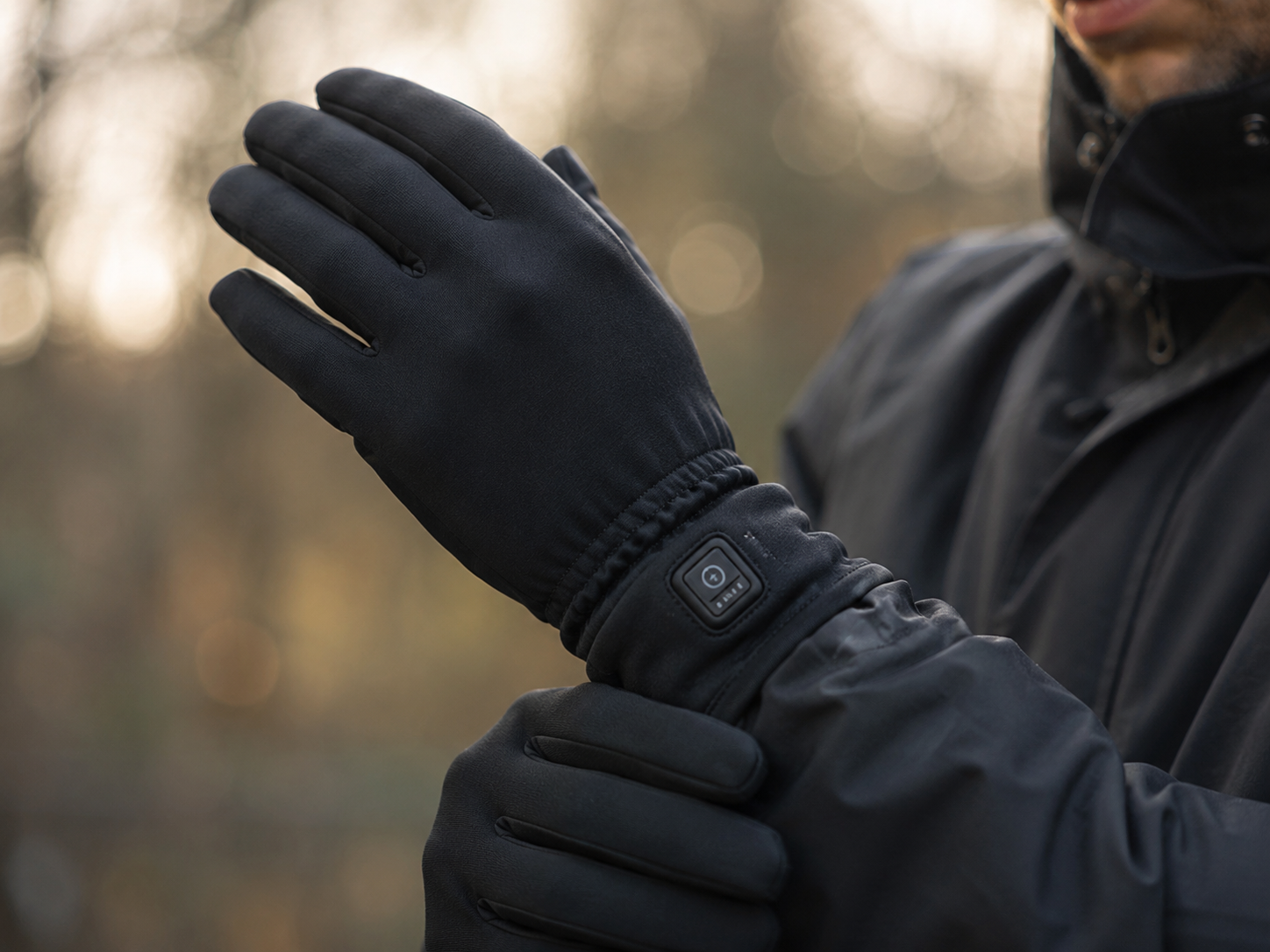
Solves the problem nobody else addresses. The temperature control is built into the battery itself with a window on top, so you change the setting without pulling the liner out from under your outer glove. If you have ever stood in the cold undressing your own hand to press a button, that is worth real money.
How they compare
| Model | Power | Claimed runtime, low | Wearable alone | Best for |
|---|---|---|---|---|
| ORORO Liners | 7.4V battery | 8 or 9 hrs, depending who you ask | Yes | Most people |
| Savior Heat Liners | 7.4V battery | 6 to 6.5 hrs | Indoors only | Tight outer gloves |
| Gerbing 12V Liners | 12V wired | Unlimited | No | Motorcycling |
| Venture Heat Avert | 7.4V battery | 4 hrs | Indoors only | Easy adjustment |
These are manufacturer figures on the lowest setting, which is the most generous number any of them publish. Expect roughly a third of it on high, and less again below freezing. Our guide to runtime claims covers why the published numbers are what they are.
Two of these figures deserve a note, because the published numbers do not agree with themselves. ORORO’s Amazon listing claims up to eight hours on low. ORORO’s own product page for the same liner claims up to nine. Savior is worse: their own published test data puts the liner at six to six and a half hours on low, three to three and a half on medium and two to two and a half on high, while third party listings for the same product advertise up to nine hours.
Nothing about either liner changed between those numbers. Only the person writing the copy did. Treat every figure in the table as the most flattering version any seller was willing to print, then plan for less.
Four questions that decide it
Will your outer glove actually close over it?
This is the question, and almost nobody asks it before ordering. Put on the gloves you intend to wear over the liner, then make a fist. If your fingertips already press the end of the glove, there is no room for a liner and no liner will fix that. If there is a clear gap, you have room for anything here. If it is close, buy the Savior liner, which is the thinnest of the four.
Riding gloves are the usual casualty. They are cut close deliberately, for feel on the controls, which is exactly the space a liner needs. That is a large part of why the wired Gerbing option exists.
Where is the power coming from?
If you are on a motorcycle, snowmobile or ATV, the vehicle is a better power source than any battery and the wired liner is the honest answer. If you are on foot, on a lift or at a desk, a wired liner is a tether to nothing and you want a battery. There is no middle option here, and our explainer on 7.4V against 12V goes through why the two systems are not really competing with each other.
Can you reach the button once everything is on?
Underrated, and the reason the Venture Heat liner earns a place. A liner buried under a ski glove puts its controller somewhere you cannot see or press, so in practice people pick one setting in the parking lot and live with it all day. Either accept that and choose a liner whose low setting runs long, or buy one with a controller you can operate through the outer glove.
Are you buying warmth, or dexterity?
If you want maximum warmth, a heated glove beats a heated liner inside an unheated glove, every time, for the same money. Liners win when you need your fingers to work: threading a fishing line, using a camera, handling tools, typing. Buy a liner because you want to keep your hands usable, not because you expect it to be warmer. The gloves versus liners guide has a thirty second test that settles which side you are on.
The specs that actually matter
Worth checking
- Where the battery pocket sits, and whether it fouls a glove cuff
- Whether elements reach the fingertips or stop at the knuckles
- Silicone or grip palm, which stops the liner coming off with the glove
- Whether it can be washed, since a liner sits against skin
- Whether spare batteries are sold separately and still stocked
Safe to ignore
- Headline runtime, which assumes low heat in a warm room
- Peak temperature figures, which nobody runs for long
- Waterproofing claims on a product worn inside another glove
- Insulation ratings, since the outer glove is doing that job
- Named heating technologies, which are marketing for resistance wire
Liners size the opposite way to gloves
Everywhere else on this site the advice is to size up, because a tight heated glove compresses your hand and restricts the blood flow you are paying to improve. Liners invert that. A baggy liner bunches inside the outer glove, the folds sit between the heating element and your skin, and you lose both warmth and the dexterity you bought the liner for in the first place.
So a liner should be snug in the way a base layer is snug: close to the skin, no loose fabric, but not compressing. If you are between sizes on a liner, take the smaller one, then leave the room in the glove that goes over it. Our sizing guide has the measurements for both.
Practical advice: the fist test tells you whether a liner can fit, but not whether you will prefer it. If you are undecided, order the liner and the heated glove you would otherwise buy at the same time, from somewhere with free returns, and keep whichever one you actually reach for after a week. Since liners cost roughly what the gloves cost, there is no cheap option to default to, and trying both costs nothing but the return postage.
Common questions
What are the best heated glove liners?
The ORORO liners for most people, because they work worn alone as well as layered, which means you actually use them. If your outer gloves are cut close, the Savior Heat liners are thinner and will fit where the ORORO will not. If you ride a motorcycle, the wired Gerbing liners are a different and better proposition.
Are heated liners cheaper than heated gloves?
No, and this surprises people. At both ORORO and Savior Heat the liner costs about the same as the brand’s full heated glove, sometimes more. You are paying for the same battery, the same controller and the same heating elements in a smaller garment. Buy a liner because it suits how you use your hands, not because you expect to save money.
Can you wear heated glove liners on their own?
Some of them. The ORORO liners have a water-resistant coated shell and are built to be worn alone in mild cold. The Savior and Venture Heat liners are thin stretch fabric with no weather resistance worth the name, so they work indoors, in a car, or under something else, and not much else. Savior says as much themselves.
How long do heated glove liners last on a charge?
Four to nine hours on the lowest setting depending on the model, and roughly a third of that on the highest. Every figure in this guide is a manufacturer number measured at room temperature, so treat it as a ceiling. Cold weather reduces lithium battery performance in every case, and a liner’s battery is small.
Will heated liners fit under my ski gloves?
Only if the gloves have spare room, which most people’s do not, because ski gloves are usually bought to fit. Do the fist test before ordering: put the gloves on, make a fist, and see whether your fingertips already reach the end. If they do, you need a heated glove rather than a liner. If it is marginal, the Savior liner is the thinnest option here.
Do heated liners help with Raynaud’s?
They can, with the same caveats that apply to gloves. You want elements that run the full length of each finger rather than sitting across the back of the hand, and a low setting that will run for hours instead of a hot setting that runs out. Two things matter more than the model: a liner tight enough to restrict circulation makes the problem worse rather than better, and heat on fingers with reduced sensation needs care, because you may not feel a liner getting too hot. Our guide to heated gloves for Raynaud’s covers both in full.
Which one should you buy?
Buy the ORORO liners unless one of the other three describes you specifically. They are the only pair here that is genuinely useful on its own, and a liner you can wear without a second glove is a liner you will wear.
Buy the Savior Heat liners if the fist test was close, because thinness is the constraint that actually decides this purchase and they are the thinnest of the four.
Buy the wired Gerbing liners if you ride, and accept the harness and controller as part of the cost rather than an optional extra.
Buy the Venture Heat Avert if you have already owned a liner and been annoyed by not being able to change the setting without taking everything off.
And before any of them, check the room in the glove you plan to wear on top. It is the only measurement that decides whether a liner works at all, and it takes ten seconds.