Heated gloves are wrong for most trade work
Search for heated work gloves and the results are dominated by Ironclad’s HEATWORX line, which is insulated and flame resistant rather than battery powered. That is not a gap in the market. It is the market’s answer.
On a jobsite a battery pack is a liability. It snags on the wrist, it dies partway through a shift, it cannot go near arc flash or anywhere an FR rating is required, and plenty of employers will not approve it. If you are framing, welding, working a panel or doing anything with your hands all day, a well-insulated work glove is the better tool and no battery will change that.
Heated gloves earn their place in a narrower job: outdoor work where you are standing still. Site supervision, surveying, traffic control, equipment operation, deliveries, outdoor inspection, anything where your body has stopped generating heat and insulation has nothing left to trap. That is the work this page is about.
Three gloves for cold outdoor work
As an Amazon Associate we earn from qualifying purchases. How we make money
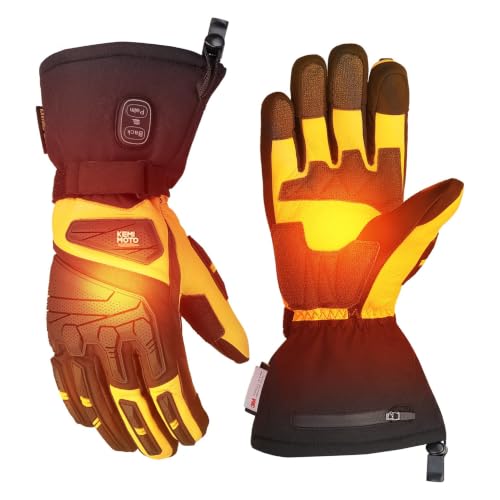
Kemimoto Heated Work Gloves
The most work-appropriate glove of the three. Kemimoto builds for powersports, which means abrasion resistance and cuff length are treated as requirements rather than afterthoughts, and the listing states 3000mAh batteries rather than hiding capacity behind a runtime claim. That single spec tells you more about what you are buying than any hours figure.

Savior Heat Heated Work Gloves
Savior’s work model, from the brand whose everyday gloves are among the warmest available at any price. Elements wrap more of the hand than most competitors manage, which matters if the problem is circulation rather than weather. The trade-off is the one Savior always carries: support is the weakest part of the package, so buy where returns are straightforward.
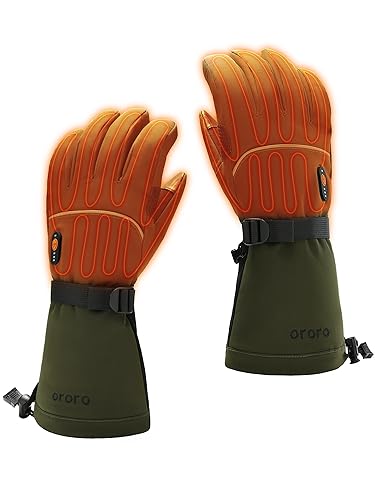
ORORO All-Around Heated Gloves
Not a work glove, and that is the point. If your outdoor work is supervision, inspection, surveying or anything else where you are stationary and not handling rough material, ORORO gives you fingertip heat, honest runtime figures and a company that answers when something fails. For that job it beats a tougher glove that heats less.
How they compare
| Model | Heating | Durability | FR rated | Best for |
|---|---|---|---|---|
| Kemimoto Work | Fingers | Work-built | No | General outdoor work |
| Savior Work | Whole hand | Work-built | No | Circulation, deep cold |
| ORORO All-Around | Fingers | Everyday | No | Stationary work |
No battery-heated glove carries a flame-resistant rating. If your work requires FR, none of these are permissible and an insulated FR glove is the only compliant option.
Jobs these gloves are wrong for
Four situations where a heated glove is the wrong purchase, and no amount of specification changes that.
Anything requiring FR or arc-flash protection
Battery-heated gloves carry no flame-resistant rating. Electricians, welders and anyone working to an FR standard need insulated FR gloves, and a lithium pack on the wrist is a hazard rather than a compromise. This is not a preference, it is a compliance question.
Continuous hands-on work
If you are gripping, lifting and handling material all day, you are generating your own heat and the elements will sit unused while you carry the battery weight anyway. A good insulated work glove costs less and lasts longer. That is why Ironclad’s insulated line dominates this search and Milwaukee’s answer to jobsite cold is a heated jacket rather than gloves.
Wet work
Everything on this page is water resistant rather than waterproof, and sustained wet is where that distinction bites. Concrete, groundworks and anything involving standing water need a proper waterproof glove, heated or not.
Work where you cannot stop to swap batteries
Real runtime is roughly a third of the advertised figure on a warm setting in genuine cold. If your shift is eight hours and you cannot break to change packs, plan for two battery sets or accept finishing cold. Our guide to runtime claims covers why the headline numbers are what they are.
Why both lead picks cost $139.99
That is not a coincidence. It is roughly where a heated glove built for work starts, and it is about double the budget tier, where the field tops out near $95.
What the extra money buys is specific. Larger batteries, because a work shift is longer than a dog walk. Element coverage that reaches the fingers rather than stopping at the knuckles. A shell that survives contact with rough material. Longer cuffs that seal against a sleeve instead of letting cold up the wrist. And a brand with a catalogue behind it, which is the difference between a warranty claim and an unanswered email.
If your budget will not stretch, the honest advice is not to buy a cheaper heated glove. It is to buy a good insulated work glove and put hand warmers in the pockets, which costs far less and works better for most trade work anyway. Our budget guide covers the sub-$100 field if you want to see what is there, and the short version is that it is thin.
Worth checking with your employer: some outdoor employers reimburse cold-weather PPE, and heated gloves sometimes qualify where a standard winter glove does not. It is worth asking before paying yourself, and worth confirming that battery gear is permitted on your site at all.
The specs that matter on a jobsite
Worth checking
- Battery capacity in mAh, not the runtime headline
- Whether a second battery set is sold separately
- Cuff length and how it closes over a sleeve
- Palm material and whether it will survive your work
- Whether the controller is usable with the glove on
Safe to ignore
- Headline runtime, which assumes a warm room
- Peak temperature claims nobody runs continuously
- “Waterproof” without a stated membrane
- Touchscreen fingertips, which rarely survive a season
- Number of heat settings beyond three
What about Milwaukee M12?
If you already own M12 tools, the appeal is obvious: batteries you have, a charger you have, and gear built for the trades rather than adapted for them. Milwaukee’s heated line runs on the same packs as the tools, so the marginal cost of adding it is lower than the sticker suggests.
Two things to know before you buy in. Most M12 heated gear is sold both as a kit and bare, meaning without battery or charger, often at prices that look similar at a glance. Buying bare when you meant kit is the single most common complaint about the line. And the heated range is jackets, hoodies and vests first: gloves are a much smaller part of it, so if cold hands specifically are the problem, a heated jacket is what Milwaukee will actually sell you.
That is not a bad answer, incidentally. Warming your core improves circulation to your hands, which is why a heated vest under a work coat solves cold fingers for a lot of people who assumed they needed gloves.
Work gloves get filthy, these ones have wires in them
This is the practical difference between heated gloves at work and heated gloves at leisure. A work glove gets dirty and a heated glove cannot go in a washing machine, so plan for spot cleaning with the batteries removed rather than a wash cycle. Our guide to washing heated gloves covers what is safe.
Two habits extend the life of the batteries more than anything else. Charge them at room temperature rather than leaving them in a cold truck overnight, and store them part-charged over the summer instead of flat. Packs left fully discharged for months degrade badly, which is covered in our guide to heated glove battery life.
Size up
Sizing is the most common complaint across every brand in this category, and it matters more for work than anywhere else, because a glove that fights you all day gets left in the truck.
There is also a reason to err large that has nothing to do with comfort. A snug heated glove compresses your hand and restricts blood flow, and restricted blood flow is what makes hands cold in the first place. You can finish colder in a tight heated glove than in a loose unheated one. If you are between sizes, go up. Our sizing guide covers measuring properly.
Common questions
Are heated gloves any good for construction work?
For most hands-on construction, no. You generate your own heat, the batteries add bulk where you need dexterity, and nothing battery powered carries an FR rating. They make sense for outdoor work where you are largely stationary: supervision, inspection, surveying, traffic control, equipment operation.
Can you wear heated gloves around electrical work?
No. Battery-heated gloves are not flame resistant and are not rated for arc flash. Where FR is required, insulated FR gloves are the only compliant option and this is a safety rule rather than a preference.
Is Ironclad HEATWORX a heated glove?
No. Despite the name and the search results it dominates, HEATWORX is an insulated line, with flame-resistant models in the range. There are no batteries and no heating elements. It is a good work glove and a common source of confusion.
How long will they last through a shift?
Expect roughly a third of the advertised figure on a warm setting outdoors, so plan for two to three hours rather than the six to eight on the listing. For a full shift you need a second battery set, which is worth pricing in before you buy.
Would a heated vest be better than gloves?
For a lot of people, yes. Warming your core improves circulation to the extremities, so a heated vest under a work coat solves cold fingers for many workers who assumed gloves were the answer, and it leaves your hands free to wear whatever the job actually requires.
Will my employer pay for them?
Sometimes. Cold-weather PPE is reimbursable at some outdoor employers, and heated gear occasionally qualifies where standard gloves do not. Ask before paying yourself, and confirm that battery-powered gear is permitted on your site at all.
Which one should you buy?
Buy the Kemimoto Heated Work Gloves if you want one glove for general cold outdoor work. It is built for abrasion, the battery capacity is stated honestly, and the cuff seals properly against a sleeve.
Buy the Savior Heat Heated Work Gloves if the cold is severe or your hands are the problem rather than the weather. Element coverage is the best here. Buy somewhere returns are easy.
Buy the ORORO All-Around if your work is stationary and you are not handling rough material. It heats better than either work glove and the company stands behind it.
And if you are working with your hands all day, buy neither. A good insulated work glove and a pocket of hand warmers will serve you better for a fraction of the money, which is the same conclusion our guide to whether heated gloves are worth it reaches from the other direction.