Heat helps. Timing helps more.
Heated gloves are among the most effective things available for managing cold-triggered Raynaud’s attacks, and most people buy the wrong ones. They buy for the coldest day of the year, when the attacks that disrupt daily life happen in a supermarket chiller aisle, an air-conditioned office, or reaching into the freezer.
Two things matter more than which pair you choose. Put them on before your hands get cold rather than after your fingers start to sting, because once vessels have constricted the gloves can only shorten the attack rather than prevent it. And make sure they are not tight, because a glove that squeezes restricts the circulation you are trying to protect.
This is not medical advice. Gloves manage one trigger; they do not treat the underlying condition. If your symptoms are new, severe, affect one hand more than the other, or come with skin changes or sores, see a doctor. Those can point to secondary Raynaud’s, which has different causes and different treatment.
Heat and numb fingers need care
This is the part most articles on this subject leave out, and it is specific to you rather than to heated gloves generally. During an attack, and for a while afterwards, your fingertips may have reduced sensation. That is the condition doing what it does. It also means you may not accurately feel how hot something is against your skin.
Heated gloves get hotter than people expect. ORORO publishes measured element temperatures for its gloves of 140°F on high, 122°F on medium and 113°F on low, taken at the heating element itself. On skin with normal sensation that is uncomfortable long before it is harmful. On numb skin the warning arrives late or not at all.
What the manufacturers say, and why we still recommend these
You should know this before you buy rather than discover it in the box. ORORO’s user manuals, which the company states apply across its whole heated range, say the product should not be used by anyone insensitive to heat, and give poor blood circulation as one of the examples. Read literally, that describes a great many people reading this page.
We recommend heated gloves for Raynaud’s anyway, and here is the reasoning, so you can judge it for yourself. The warning is about sensation rather than circulation as such. Heat you cannot feel can burn you, and warnings of this kind exist wherever a heat source meets skin that may not report temperature accurately, which is the same reason heating pads carry them. It is an argument about how to use a heated device, not a finding that warmth is bad for Raynaud’s.
What it does mean is that the manufacturers and this page agree on the practical advice, and it is the same advice either way: use the low setting, rewarm gradually rather than reaching for maximum heat on numb fingers, and check your skin by looking at it rather than by how it feels. If you cannot feel temperature in your fingers reliably, that is not a reason to be more careful than average, it is a reason to be more careful than the person the glove was designed for.
Use the low setting, particularly on hands that are already cold. Rewarm gradually rather than reaching straight for maximum heat, and take the gloves off periodically to look at your skin rather than relying on how it feels. Low sustained heat is what prevents attacks anyway, so this costs you nothing in effectiveness.
Worth raising with your doctor
Not as a formality, and not because everything on the internet says so. There are specific reasons this is a conversation worth having before you rely on a heated device.
Raynaud’s can be primary, or secondary to another condition, and the two are not managed the same way. Secondary Raynaud’s can involve a risk of tissue damage that changes the calculation entirely. If you have any loss of sensation in your fingers, from this or from anything else, that is exactly what the manufacturer warnings are about and it is worth saying out loud to someone who can examine you. And if you already have sores, ulcers or broken skin on your fingers, do not apply a heated device to them without asking first.
None of that is a reason not to buy heated gloves. It is a reason to spend five minutes on it at an appointment you are probably already having.
Four things that decide whether a glove helps
The specifications that sell heated gloves are not the ones that matter here. Marketing leads on peak temperature and maximum warmth, which is the right pitch for somebody facing a cold day outdoors. What suits a condition that flares in a chiller aisle is gentle heat, delivered to the right part of the hand, in a glove you have not already taken off. These four are what that translates to, roughly in the order they matter.
Element coverage across the whole hand
Many heated gloves run elements across the back of the hand and stop at the knuckles. For general cold that is a compromise. For Raynaud’s it misses the point, because fingers and fingertips are exactly where attacks begin. Look for heating that runs down every finger, not just the back of the hand.
A low setting you can leave running
A glove that reaches a high temperature for forty minutes is less useful than one that holds a moderate temperature for six hours. Sustained gentle warmth is what prevents attacks, and it is also the safer way to use a heated device on hands with reduced sensation. Peak temperature figures on packaging tell you almost nothing about either.
A fit that is roomy, not snug
This is where advice elsewhere gets muddled. Gloves should hold warmth without compressing your hand, and a glove one size too small does real harm: it restricts blood flow, which is the thing already going wrong. If you are between sizes, go up. This is the opposite of compression gloves, which apply deliberate, even, gentle pressure and are a different product with a different purpose.
Thin enough to actually wear
A bulky ski glove is useless at a desk, in a car, or pushing a trolley. If your attacks happen indoors and in daily life, the glove that helps is the one thin enough that you keep it on.
What we would buy
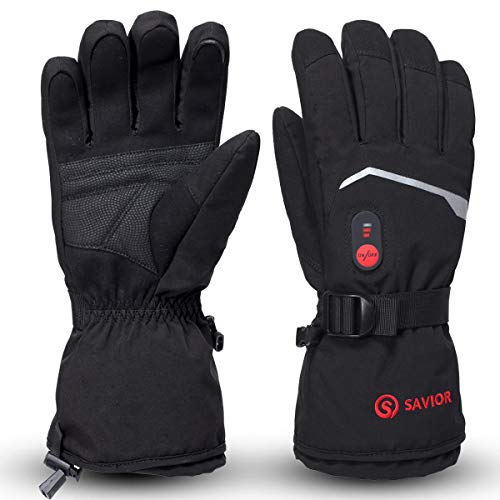
Savior Heat Heated Gloves
The specification lines up with what this condition actually needs: elements wrapping the whole hand and every finger, and a low setting low enough to run for hours rather than a burst that empties the battery. Independent testers rate it the warmest budget heated glove, and owners with circulation problems are among the most positive.

Savior Heat Heated Liners
For most people with Raynaud’s this is the more useful purchase, and it is the one product pages rarely lead with. Thin enough to wear at a desk, in a car or around the house, which means you keep it on, which means the heat is there before the attack rather than after it.
Both picks above are Savior Heat, which is worth saying plainly rather than leaving you to notice. They are also the same manufacturer as Snow Deer, a fact the company has stated publicly: the Snow Deer store confirms both are their brands and share core battery and control technology. So if you want a second opinion from a genuinely different company, the alternative below is it, not another Savior product under a different name.
If the support record on Savior concerns you, and it reasonably might on a product you depend on daily, the ORORO All-Around is the safer buy. The heat reaches the fingertips and the warranty is both longer and clearer: ORORO covers heated gloves for one year on elements and batteries, stated the same way everywhere. Savior’s base warranty is 180 days, with a free extension to twelve months available depending on where you bought, and their own site quotes a year on gloves with six months on batteries elsewhere. Three different figures from one company is not a reason to avoid them, but it is worth knowing before you need to make a claim.
Put them on ten minutes early
This is the single most useful thing on this page, and it costs nothing. Most people reach for gloves once their fingers already sting, by which point the vessels have constricted and the attack is underway. Warmth applied then shortens the episode. Warmth applied before the cold exposure can prevent it.
In practice that means gloves on before you leave the house rather than at the door, before the supermarket rather than in the chilled aisle, and before you sit down in a cold room rather than once your hands have gone numb. The heated glove’s advantage over an ordinary one is precisely that it can be warm before you need it.
It is also the safer way to use them. Warming hands that are already warm needs the low setting. Warming hands that have gone numb tempts people onto high, which is exactly when reduced sensation makes high a bad idea.
Worth knowing about preheat. Several brands, ORORO included, run a preheat cycle of a few minutes when you first switch them on. That is not a fault, but it does mean switching them on when you are already cold is the slowest way to use them.
Two things that do not do what they claim
Silver and thermal-reflective gloves. The claim is that silver fibres reflect your own body heat back at your hands. This has actually been tested properly, in a double-blind randomised crossover trial of systemic sclerosis patients published in Rheumatology. The result is worth stating precisely, because it is more interesting than a simple debunking. Raynaud Condition Scores improved substantially with silver fibre gloves, falling from 6.43 at baseline to 3.91. They also improved with ordinary gloves, to 3.90. There was no statistically significant difference between the two.
So silver gloves work. They just work exactly as well as normal gloves, and no better, which means the premium buys you nothing. A well-fitting ordinary glove or a thin liner does the same job. Two participants in that trial also stopped early because of an allergic reaction to the gloves.
The cheapest heated gloves you can find. At the bottom of the market, independent reviewers treat heated gloves as effectively disposable. On something you rely on daily through a winter, replacing it mid-season is worse value than buying once, and a failure in January is a practical problem rather than an inconvenience.
Common questions
Do heated gloves actually help with Raynaud’s?
They help with the cold trigger, which for most people is the main one. They supply warmth rather than merely retaining it, which is what separates them from ordinary insulated gloves. They do not treat the underlying condition, and stress-triggered attacks will still happen.
Manufacturers say not to use heated products if you have poor circulation. Should I?
That warning is real and worth understanding rather than ignoring. ORORO’s manuals, which apply across their heated range, say the product should not be used by anyone insensitive to heat and give poor circulation as an example. The concern is sensation: heat you cannot feel can burn you, which is why heating pads carry similar warnings. It is guidance about how to use a heated device rather than a finding that warmth is bad for Raynaud’s. Use the low setting, rewarm gradually, look at your skin rather than judging by feel, and raise it with your doctor if you have reduced sensation, secondary Raynaud’s, or any broken skin on your fingers.
Can heated gloves burn you?
They can get hot enough to be a problem on skin that cannot feel it properly. ORORO publishes element temperatures up to 140°F on the high setting. If your fingers are numb during or after an attack, that warning signal is unreliable, so use the low setting, rewarm gradually, and check your skin by looking at it rather than by how it feels. If you have any existing skin damage or sores on your fingers, ask your doctor before using one.
Should the gloves be tight or loose?
Neither tight nor baggy. They should hold warmth without compressing your hand. A glove that squeezes restricts blood flow and can make an attack worse, so if you are between sizes, go up. Compression gloves are a separate product that applies deliberate gentle pressure, and they are not the same thing as a tight heated glove.
Gloves or liners?
Liners if your attacks happen indoors and during ordinary daily activity, because you will actually keep them on. Gloves if you are outdoors in real cold. Many people end up with both, and since liners are not the budget option people assume, budget for that properly rather than expecting one to be the cheap version of the other.
How long do the batteries last?
Longer on low than the marketing suggests you need, and shorter on high than you would hope. Savior’s own published figures for their gloves range from about six hours on low up to ten depending on which of their pages you read, with roughly two to three hours on high. Independent testing consistently lands below the headline claims. Since low is the setting you should be using anyway, most people find runtime is not the limiting factor. If you need all-day coverage, charge a second set of batteries rather than trusting any single number.
Can I wear them indoors all day?
That is what the thin liners are for, and it is the use case that helps most people the most. Run them on the lowest setting rather than high: sustained gentle warmth prevents attacks better than intermittent heat, and it is the safer choice on hands with reduced sensation.
Are silver or thermal gloves worth trying?
Not at a premium over ordinary gloves. The one properly controlled trial found they improved symptoms, but by the same amount as normal gloves, with no significant difference between them. Spend the money on a well-fitting glove or a heated liner instead.
When should I see a doctor rather than buy gloves?
If symptoms are new, worsening, affect one hand noticeably more than the other, or come with skin ulcers or sores. Those can indicate secondary Raynaud’s, which is associated with other conditions and needs proper assessment. Gloves are useful alongside medical care, not instead of it.
What to do
If your hands go cold outdoors, buy the Savior Heat gloves for the full-hand coverage and the usable low setting, and buy them somewhere with easy returns.
If your attacks happen at a desk, in a car or around the house, buy the thin liners instead. They are the ones you will actually keep on, and keeping them on is most of the benefit.
Either way: put them on before you get cold rather than after, buy a size that leaves your hand room, and run them on low rather than high. All three matter more than which pair you choose. Our full roundup of the best heated gloves has the wider field, and the gloves versus liners guide has a thirty second test for whether a liner will fit inside what you already own.