The budget tier is thinner than it looks
Search for cheap heated gloves and you will find dozens of listings under $50. Almost all of them are thin liner-style gloves with a single small battery pair, heating only the back of the hand, from sellers who will not exist in two years. They are the reason people conclude the whole category is a gimmick.
The genuine sub-$100 field, meaning complete insulated gloves with replaceable batteries and a brand behind them, is small and has got smaller. These are the three worth your money, and the one specification that separates a good budget glove from a bad one.
Three gloves under $100
As an Amazon Associate we earn from qualifying purchases. How we make money
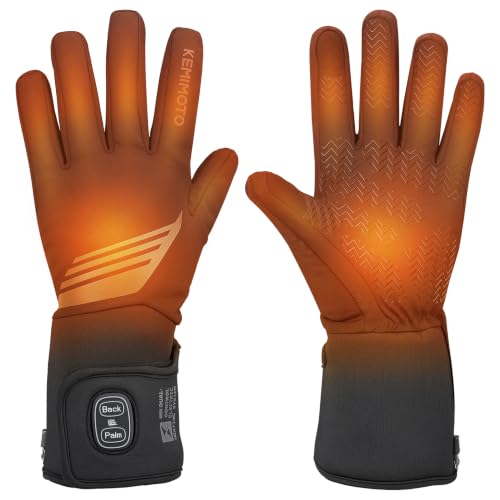
Kemimoto Dual-Zone Heated Gloves
The only glove on this page that puts heat where the cold actually is. Dual-zone means elements run into the fingers rather than stopping across the knuckles, and that single difference is what separates a budget glove people keep from one that ends up in a drawer. It costs about $30 more than the cheapest option here and it is worth every dollar of it.
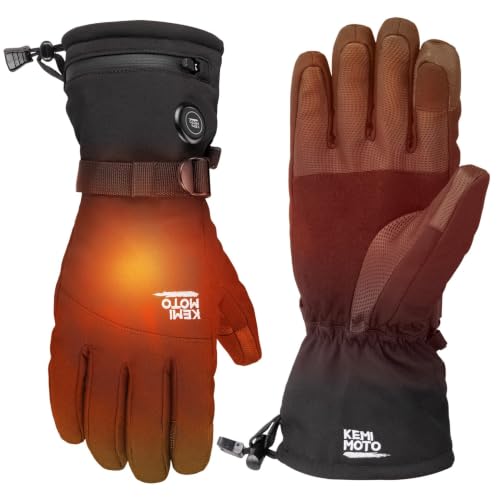
Kemimoto 3 Heat Levels
The same brand’s conventional glove: thicker, warmer as a piece of clothing, and back-of-hand heating only. If you want something that keeps your hands warm before the batteries are switched on and you can live with cooler fingertips, this does more of the work passively than the thin dual-zone model does.
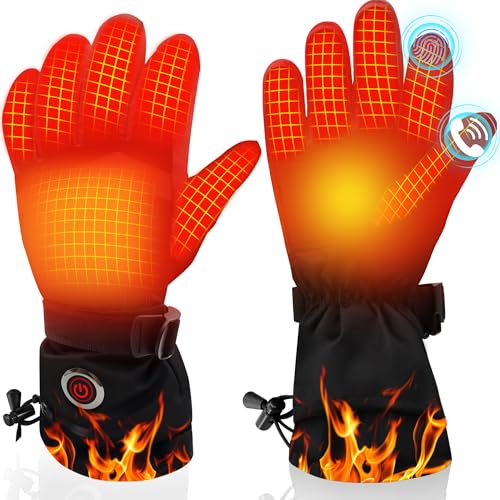
Autocastle Rechargeable 5V
The floor. Below roughly this price the listings stop being gloves and start being liners with a battery attached, so this is where the category becomes worth buying at all. Ordinary back-of-hand heating and ordinary construction, but it is a complete glove at a genuinely low price, which is the whole job.
How they compare
| Model | Heating | Shell | Weatherproof | Best for |
|---|---|---|---|---|
| Kemimoto Dual-Zone | Fingers | Thin | Water resistant | Cold fingertips |
| Kemimoto 3 Heat | Back of hand | Insulated | Water resistant | Warmth with heat off |
| Autocastle 5V | Back of hand | Insulated | Water resistant | Lowest spend |
Nothing in this price band is waterproof, whatever the listing says. All three are recent listings with limited owner-report history, which is a real limitation of the tier rather than of these specific gloves.
The gloves that used to be here
Two brands that belonged on a budget list a year ago no longer do, and it is worth saying so plainly rather than quietly dropping them.
Savior Heat now lists between roughly $120 and $210 depending on the model. It remains one of the warmest gloves available and covers the whole hand with elements, which is why we still recommend it, but it is a mid-tier purchase now. Our Savior Heat review covers it in full.
Snow Deer sits at about $129. It has the longest owner-report history of any budget-adjacent brand and replacement batteries have stayed available, which counts for a lot. If your ceiling is soft, it is the one to look at just above this list. Our Snow Deer review has the detail.
The practical effect is that the real gap between budget and mid tier is now wider than it was. Under $100 you are choosing between recent listings from smaller brands. Over $120 you are choosing between established products with track records. That is a genuine decision rather than a marketing one, and it is worth knowing before you buy.
What $100 does not buy
Every glove on this page shares the same limits, and knowing them in advance is the difference between a good purchase and a returned one.
Runtime is shorter than the listing says
Advertised figures assume the lowest setting at room temperature with a new battery. Outdoors on a high setting, expect roughly a third of the headline number. That is chemistry rather than dishonesty and it applies at every price, but budget gloves carry smaller cells so the gap bites harder. Our guide to runtime claims explains what to actually expect.
Weather resistance is limited
Water resistant means snow and light rain for a while. It does not mean sustained wet, and nothing in this band is waterproof no matter how the listing is worded. If you will be out in real weather for hours, this is the tier’s hardest limit.
Support is a lottery
When an element fails in year two, a mid-tier brand replaces the glove and a budget seller often does not answer. Buy somewhere with a straightforward returns process and treat the retailer’s policy as the warranty rather than the manufacturer’s.
Check before you buy: whether replacement batteries are sold separately for the exact model. Batteries fade after two or three winters while the glove itself is still fine, and a glove with no replacements available is a two-season purchase rather than a four-season one. That changes the cost per winter more than the price does.
Where the elements sit
If you take one thing from this page, take this. Cheap heated gloves heat the back of the hand. Warm blood passing through does reach the fingers, which helps, but it is indirect and slow, and your fingertips are almost always what actually hurts.
Gloves that run elements into the fingers cost more, and under $100 the options are few. That is the entire reason the dual-zone Kemimoto leads this page despite being the most expensive thing on it.
So the honest framing of this tier is: if cold fingertips are your specific complaint, buy the one glove here that addresses them, or spend more and move up. If you want warmer hands overall and can accept cooler fingers, any of the three will do. We work through that decision in are heated gloves worth it.
Two things to weigh instead
Heated liners under gloves you already own. If your existing winter gloves have room to spare, a liner puts heat inside a shell you already trust. The catch is that liners are frequently priced at or above full heated gloves, so this is a flexibility play rather than a saving. Our liners guide covers the options.
Spending another $50. Above roughly $120 you reach established brands with track records, fingertip heating as standard, larger batteries and support that answers. If you are outdoors regularly rather than occasionally, that is the better purchase, and the main heated glove guide covers what is worth buying there.
Size up
Sizing is the most common complaint across every brand in this category, and it costs twice: once on the exchange, and once when someone gives up and keeps a pair that does not fit.
There is also a reason to err large that has nothing to do with comfort. A snug heated glove compresses your hand and restricts blood flow, and restricted blood flow is what makes hands cold in the first place. You can finish colder in a tight heated glove than in a loose unheated one. If you are between sizes, go up, and order somewhere returns are free. Our sizing guide covers measuring properly.
Common questions
Are heated gloves under $100 any good?
The good ones are. The problem is that most listings at this price are liners with a battery rather than gloves, and they set expectations that the real products then get blamed for. Stick to complete insulated gloves from a brand with a catalogue behind it and the tier works.
Why is nothing here under $60?
Because below roughly that price the products stop being gloves. A $29 listing is typically a thin liner with a single small battery pair and no meaningful insulation, which leaves you cold the moment the charge fades. Buying one is how people decide the technology does not work.
Do cheap heated gloves heat the fingertips?
Usually not. Almost everything under $100 heats the back of the hand only, which warms blood on its way to the fingers but does not warm the fingers directly. The dual-zone Kemimoto is the exception on this page and that is why it leads it.
Why are Savior Heat and Snow Deer not on this list?
Price. Savior now lists between roughly $120 and $210, and Snow Deer sits near $129. Both are good gloves and both are covered in our reviews, but neither is a budget purchase any more.
How long do the batteries last on a charge?
Expect roughly a third of the advertised figure once you are outdoors on a warm setting. Budget gloves carry smaller cells, so plan around two to three hours of real use rather than the six to eight on the listing. Our guide to heated glove battery life covers how many seasons the packs themselves last.
Are these warm enough for motorcycling?
No. Wind at speed removes heat faster than a small wrist battery can replace it, and none of these carry abrasion protection, so they are not riding gloves in any case. Wired 12V gloves are a different product for a different problem, which our guide to 7.4V against 12V explains.
Which one should you buy?
Buy the Kemimoto Dual-Zone if your complaint is cold fingers. It is the only glove under $100 here that puts heat where the problem is, and the extra $30 buys more than any other upgrade at this price would.
Buy the Kemimoto 3 Heat Levels if you want a warmer glove rather than a smarter one, and you are content with cooler fingertips in exchange for more insulation.
Buy the Autocastle 5V if the budget is the budget. It is a complete glove at the point where the category stops being a false economy.
And if your ceiling is soft, look just above it. At around $129 the choice widens considerably, and the gloves there have years of owner reports behind them rather than months.