What Heated Socks Actually Do
A heated sock is a regular sock with a thin heating element knitted or sewn into the foot and a small rechargeable battery riding in a pocket at the top of the calf. Press the button on the battery and the element warms a set area of your foot, usually the toes, sometimes the whole sole. That last detail matters more than anything else on the box, because the toes are where most people feel the cold first, and a sock that heats only the instep can leave them numb.
The second thing to understand is that every heated sock trades thickness for warmth. The heating wire, the battery cable and a warmer knit all add bulk, so a heated sock that feels great in a roomy hunting boot can be too tight in a fitted ski boot. Tight boots squeeze blood flow and make cold feet worse, which defeats the point. Before you look at runtime or price, think about which boot the sock is going into.
Finally, buy early. Searches for heated socks climb through the fall and peak in December, which is when popular sizes sell out and prices stop dropping. If you know you will want a pair this winter, October and November are the better months to order.
What to Buy
Seven heated socks made the list, ranked on where the heat goes, battery size, published runtime, fabric and value. Every spec below comes from the brand's own product page or retail listing, checked in October 2026, and scores are our editorial judgment rather than test results.

Fieldsheer Pro Merino Heated Socks
The heated sock with the best combination of battery, heat placement and fabric. Fieldsheer puts a 3.7V 3600mAh battery in each sock and heats both above and below the toes rather than one side only. The knit is 54 percent merino wool, it runs over the calf with arch support and a zippered battery pocket, and four settings run from 90 to 135 degrees. You can change the level with the button or from a phone through the MW Connect Bluetooth app. Fieldsheer's product page claims 13 or more hours on low, while the Amazon listing and older retail copy say 11, so plan on the lower figure.

ORORO Toe and Sole Heated Socks
ORORO's current sock heats around the toes and under the sole, which covers the two places cold feet complain about most. Each sock takes a 7.4V 2000mAh battery, and ORORO quotes about 3 hours on high, 6 on medium and 11 on low. A sensible safety detail: the high setting steps down to medium on its own after 15 minutes, so you cannot forget it on full. The socks machine wash cold in a mesh bag once the batteries are out. One thing to check before you buy: ORORO includes the batteries and a USB cable but not a wall charger, and recommends a 5V/3A adapter for a 2.5 hour charge.
Lenz Heat Sock 5.1 Toe Cap
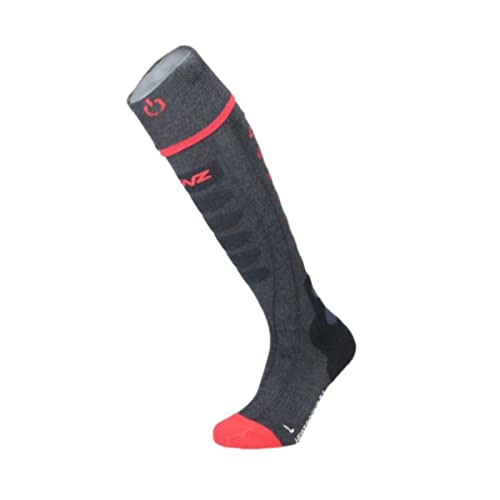
The heated sock built for a ski boot. Lenz uses a thin merino and silk knit with a shin protector and padding at the toe and heel, and its flat Toe Cap element wraps the toes so they warm from above and below. With the rcB 1400 battery, Lenz lists 12.5 to 16.5 hours on level one and 4.5 to 5.5 hours on level three, and it publishes figures for every battery it sells, which few brands do. The regular fit suits average to strong calves; Lenz makes a slim fit version for narrow legs. Batteries are also sold separately on some listings, so confirm the pack is in the bundle you pick.

Gerbing 7V Ultimate Wool Heated Socks
Gerbing heats the entire footpad, the whole bottom of the foot, with its microwire element, which suits hunters in a stand, anglers on the ice and anyone whose feet go cold from the ground up. It is also one of the few brands to put a temperature on each setting: 140°F on high for about 3 hours, 120°F on medium for about 5 and 100°F on low for about 7. Two 7V 2200mAh batteries and a dual charger come in the box. The wool blend knit is thick and the cut is long, and some buyers mention a snug calf opening, so this sock belongs in a roomy boot.

Snow Deer 7.4V 3000mAh Heated Socks
Snow Deer packs two 7.4V 3000mAh batteries into a knee-high CoolMax sock, the largest 7.4V capacity on this list. The element covers the whole toe area plus the top and bottom of the foot, a light on the controller shows remaining charge, and a dual charger and one-year warranty come in the box. Two cautions: Snow Deer does not publish runtime or temperatures for this model, and its own comparison chart lists 2200mAh for the same sock, so check the battery label on the listing you buy.
Volt Heat 8V Heated Socks
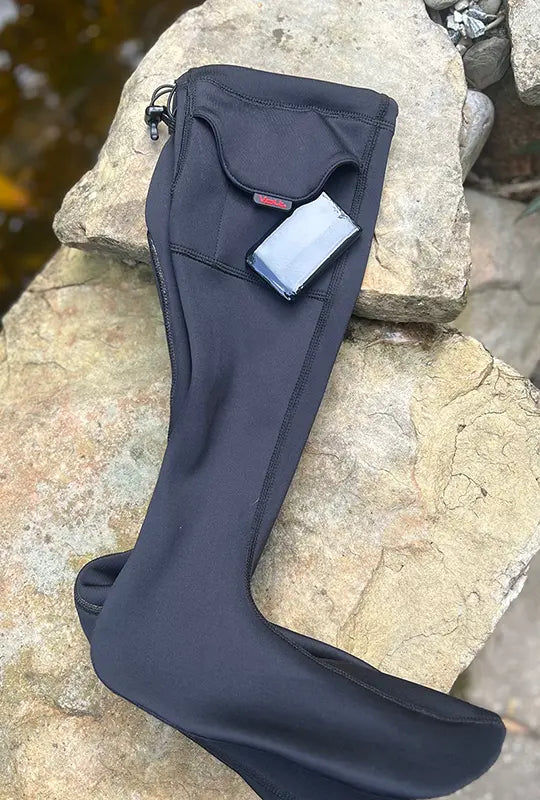
Volt claims the longest runtime of any sock here: about 14 hours on low, 10 on medium and 7 or more on high, from two 8V 2600mAh flat batteries that weigh about 2 ounces each. A wireless remote lets you change the setting without reaching into your boot, which is handy under ski pants or bibs. The heat targets the bottom of the foot rather than the toes specifically, the fabric is a thin polyester and spandex interlock, and sizes run to 2XL for men's 13 and 14. Volt sells direct rather than on Amazon and recommends hand washing.

Savior Heat Carbon Fiber Heated Socks
Savior's carbon fiber sock is the least expensive way into a reputable heated sock. Each foot gets a 7.4V 2200mAh battery, three settings with a listed peak of 150°F, and heat concentrated on the toes and forefoot. A dual charger comes in the box with a one-year warranty, and the knit is a stretchy synthetic blend rather than wool. Savior's listings vary on runtime and quote figures as low as 3 to 8 hours, so treat this as a pair for a few hours outdoors rather than a full day, and hand wash it with the batteries removed.
How They Compare
The table lines up what separates one heated sock from another once the marketing is stripped away: where the heat goes, how big the battery is and what each brand claims on its lowest setting.
| Model | Power | Claimed runtime, low | Heat zone | Fabric |
|---|---|---|---|---|
| Fieldsheer Pro Merino | 3.7V, 3600mAh | 11 to 13+ hrs | Above and below toes | 54% merino blend |
| ORORO Toe and Sole | 7.4V, 2000mAh | About 11 hrs | Toes and sole | Synthetic blend |
| Lenz 5.1 Toe Cap | rcB 1400 pack | 12.5 to 16.5 hrs | Toes, top and bottom | Merino and silk |
| Gerbing 7V Ultimate Wool | 7V, 2200mAh | About 7 hrs | Full footpad | Wool blend |
| Snow Deer 3000mAh | 7.4V, 3000mAh | Not listed | Toes, top and bottom of foot | CoolMax |
| Volt Heat 8V | 8V, 2600mAh | About 14 hrs | Bottom of foot | Polyester and spandex |
| Savior Heat Carbon Fiber | 7.4V, 2200mAh | 3 to 8 hrs (range) | Toes and forefoot | Synthetic blend |
Every figure is the manufacturer's own claim, taken from product pages and retail listings in October 2026. Low-setting runtimes are measured in mild conditions, so expect less inside a cold boot. Where a brand gives no figure, the table says so. Our guide to runtime claims explains why these numbers run optimistic.
Heat Placement Beats Battery Size
Shoppers compare heated socks on battery capacity, but the location of the heating element decides whether your feet actually feel warm. Your toes sit at the far end of your circulation and have little muscle to make their own heat, so they cool first. A sock that heats only the instep or the arch warms a part of the foot that was not cold to begin with. That is why Lenz and Fieldsheer wrap their elements around the toes, and why Gerbing runs heat across the full footpad for people who lose warmth through the ground.
Voltage is a distraction here too. Stored energy is voltage multiplied by capacity: a 7.4V 2000mAh battery stores 14.8 watt-hours while a 3.7V 3600mAh battery stores about 13.3. Those figures are close; what each brand does with the energy, and where it sends it, is not. Our explainer on 7.4V versus 12V heated gear covers the voltage question in more depth.
Practical advice: if your toes are the problem, buy a sock whose listing names a toe element. If your whole foot goes cold standing on snow or ice, look for full-sole or footpad heat instead. Battery size comes second.
Four Questions That Decide It
Most disappointment with heated socks comes from buying the wrong sock for the boot or the day. These four questions narrow the list quickly.
What Boot Is It Going Into?
Fitted ski and skate boots need a thin sock with no bulky seams, which points to the Lenz or the Fieldsheer. Roomy pac boots, hunting boots and work boots can take a thick wool sock like the Gerbing. If you have to loosen your boot to get a heated sock in, you have the wrong sock, because a tight boot restricts circulation.
How Long Will You Be Outside?
Take the low-setting claim and plan on roughly half of it in real cold, since brands measure in mild conditions and most people run a higher setting outdoors. For a full day on the hill or in a stand, look for 3000mAh or more, or a brand like Lenz that publishes figures for larger packs. Our guide to how long heated batteries last walks through the math, and the same rules apply to socks.
Are You Moving or Standing Still?
Skiers and hikers make heat as they move, so a toe-focused sock on low is often enough. Hunters, anglers and spectators make very little, so they benefit from more coverage and a higher setting, which is where full-footpad heat earns its keep.
Will You Wash It Often?
Every sock here needs its batteries removed before washing. ORORO, Lenz and Fieldsheer allow gentle machine washing; Savior, Snow Deer and Volt recommend hand washing. If you will wear the socks several days a week, a machine-washable pair saves real effort. Our washing guide covers the general rules for heated gear.
Heated Socks for People Whose Feet Run Cold
Some people simply have cold feet, indoors and out, and a heated sock on its lowest setting can make a cold office floor or an evening on the porch more comfortable. For that use, choose a thin sock you can wear in ordinary shoes, start on low and check your skin regularly. Anyone with reduced sensation in their feet should talk to a doctor before using any heated product, because you may not notice if a setting is too warm.
Readers who deal with cold, numb fingers often ask about feet as well. Our guide to heated gloves for Raynaud's covers thin, low-profile heated options for hands, and the same principle applies to socks: gentle, steady warmth on a low setting is the goal, not maximum heat. A heated sock keeps your feet warm; it does not treat any condition.
Four That Did Not Make It
Several heated socks come up often in searches but did not earn a place on the list.
Therm-ic Powersocks. Therm-ic makes well-regarded heated ski socks and several sets are on Amazon, but the listings we found did not publish runtime or battery figures we could confirm, so we could not rank them fairly against the brands above.
Kemimoto App Control Heated Socks. Kemimoto pairs a toe heat zone with a 5000mAh battery and app control, which sounds promising, but its product page was unavailable when we checked and we would rather not recommend specs we could not verify.
Fieldsheer Premium 3.0 Merino. A strong sock with Bluetooth and four settings, but its 2200mAh battery and single toe zone make it a step down from the Pro Merino for only a small saving.
Generic 5000mAh listings. Amazon is full of unbranded heated socks claiming huge batteries and 10 hour runtimes. Without a named brand, a warranty you can actually use or published safety details, we left them out.
The Specs That Actually Matter
Heated sock listings are packed with numbers. These are the ones worth reading and the ones you can skip.
Worth checking
- Where the element sits: toes, sole or full footpad
- Battery capacity and voltage, so you can work out watt-hours
- Sock thickness relative to the boot you will wear
- Whether a charger is in the box or only a cable
- Washing instructions and a real warranty
Safe to ignore
- Peak temperature claims, which apply to the high setting only
- Runtime claims with no setting or conditions stated
- Heat-up times measured in seconds
- Voltage on its own, without capacity alongside it
- Long lists of activities the sock is supposedly made for
Common Questions
Short answers to the questions people ask most before buying heated socks.
What are the best heated socks?
For most people, the Fieldsheer Pro Merino Heated Socks offer the best mix of battery size, toe heat and fabric, with a 3600mAh battery, a dual toe zone and a merino blend. Skiers should look at the Lenz Heat Sock 5.1 Toe Cap for its thin fit, and hunters who stand still should consider the Gerbing 7V Ultimate Wool for its full-footpad heat.
How long do heated socks last on one charge?
Manufacturer claims for the socks here run from about 7 to 16.5 hours on the lowest setting and around 3 to 5 hours on high. Expect less inside a cold boot. Runtime depends on battery size, setting and how cold your feet are when you start.
Can you wear heated socks in ski boots?
Yes, if the sock is thin enough. Ski boots are fitted closely, and a thick heated sock can cut circulation and make your feet colder. Thin merino designs with the battery at the top of the calf, like the Lenz and Fieldsheer, are made for this use.
Are heated socks safe to wash?
Most are, once the batteries are removed. ORORO, Lenz and Fieldsheer allow a gentle machine wash, while Savior, Snow Deer and Volt recommend hand washing. Always air dry unless the label says otherwise, and make sure the connector is completely dry before you plug the battery back in.
Are heated socks better than heated insoles?
They suit different needs. Heated socks put the element closer to the toes and work in any boot, but you need a charged pair for every wear. Heated insoles stay in one pair of boots, are easier to keep dry and avoid washing the electronics, but they usually heat only the forefoot from below.
Can I take heated socks on a plane?
Yes, but the batteries go in your carry-on. FAA rules require spare lithium-ion batteries to travel in the cabin, and packs under 100 watt-hours need no airline approval. A 7.4V 2200mAh heated sock battery is 16.28 watt-hours, far below that limit.
Which One Should You Buy?
Buy the Fieldsheer Pro Merino if you want one pair of heated socks that does most things well, with a big battery, toe heat from both sides and a merino blend.
Choose the ORORO for daily wear with toe and sole heat and easy machine washing, or the Lenz 5.1 Toe Cap if the socks are going into ski boots.
Pick the Gerbing 7V Ultimate Wool for long, still hours in roomy boots, and the Snow Deer if you want the largest 7.4V battery for the least money.
Go with the Volt Heat 8V if a wireless remote and the longest claimed runtime matter most, and the Savior Heat if you want a reputable heated sock on a tight budget. Whichever you pick, order before December, when demand peaks.