Sitting still is the whole problem
Every other reason to buy heated gloves involves moving. Riding, skiing, walking the dog. Your body is producing heat and the glove is holding onto it. Hunting from a stand or a blind is the opposite, and that is why it is the one activity where heated gloves stop being a luxury.
Four hours of sitting motionless in the cold means your body is generating almost nothing. Insulation can only slow the loss of heat you are making, and if you are not making any, more insulation just buys you a slightly slower decline. A heated glove adds heat rather than conserving it, which is a different thing entirely. This is the scenario the technology was built for.
The second problem is that you eventually need your fingers. A glove warm enough to sit in for four hours is too thick to do anything with, which is why the design that matters here is the flip-top, and why a heated liner under a thin shooting glove is a genuinely different route to the same result.
Four picks below. Every figure is the manufacturer's own claim, taken from the product listing and labeled as such.
What to buy

KEMIMOTO Heated Hunting Gloves, Magnetic Flip-Top
The magnetic flip-top is the reason this is the lead pick. The finger hood folds back and holds itself there, so you go from a warm enclosed glove to bare fingers without taking anything off and without a strap to fumble with in the cold. It solves the actual conflict in hunting gloves rather than picking a side of it.
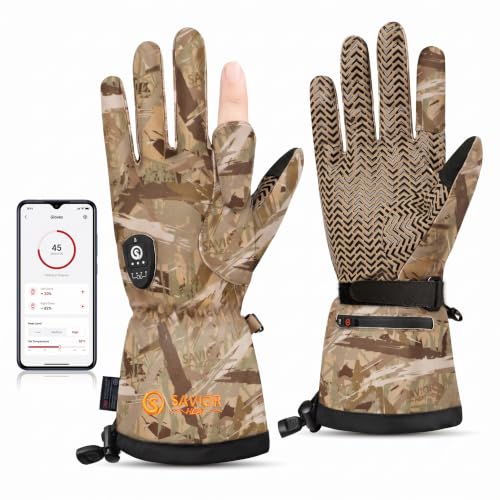
Savior Heat Heated Hunting Gloves
Eleven hours on low is the longest runtime claim of anything on this site, and it comes from a 3000mAh pack rather than optimistic arithmetic. Savior also markets this one at duck hunting specifically, which is the wettest thing you can ask a glove to do. Heat off, it still works as an ordinary glove, so it covers a mild October morning as well as a January one.

TIDEWE Heated Hunting Gloves
The cheapest pick here and the most honest listing on the site. TIDEWE publishes a temperature band and a runtime for all three settings rather than quoting one flattering number, which tells you more about a company than any marketing line does. If you want to know what you are actually buying before you buy it, this is the one that tells you.

ORORO Heated Glove Liner
A different answer to the same problem. Rather than a thick glove you have to open, a thin heated liner goes under the shooting glove you already trust, so your hand position, your grip and your feel do not change at all. Read the caveat below before you buy though, because ORORO is clear about what this is for and it is not the coldest day of the season.
How they compare
| Model | Claimed runtime, low | Top temperature | Weather protection | Trigger access |
|---|---|---|---|---|
| KEMIMOTO Flip-Top | 3 to 6 hrs | 149F | Water resistant | Magnetic flip-top |
| Savior Heat Hunting | Up to 11 hrs | About 150F | Waterproof, as claimed | Remove the glove |
| TIDEWE | 6.5 to 8.5 hrs | 140 to 149F | Waterproof coating | Remove the glove |
| ORORO Liner | Up to 8 hrs | Not stated | Water-resistant shell | Keeps your own glove |
Every figure is the manufacturer's own claim, taken from the product listing, and low-setting figures assume mild conditions. Expect less in real cold, because lithium cells lose capacity in exactly the weather you bought these for. Our guide to runtime claims explains where the gap comes from.
TIDEWE deserves credit in that table. It is the only one of the four that publishes a temperature band and a runtime for every setting rather than quoting the single most flattering number. That does not make it the warmest glove here, but it does mean you can plan a day around it.
Warmth and feel are in direct conflict
A glove thick enough to keep your hands warm through a four hour sit is too thick to do anything precise in. That is not a design flaw anyone has failed to solve, it is a physical trade-off, and every hunting glove on the market picks a position on it. The useful question is not which glove is warmest, it is how you get your fingers back when you need them.
There are three answers and they suit different people.
Flip-top. The finger hood folds back and exposes your fingers. The magnetic version holds itself open, which matters more than it sounds, because the alternative is a strap or a snap you have to operate with cold hands while staying still. This is the fastest route from warm to ready.
Take the glove off. Simple, and what most people do. It works, and the cost is that your hand goes from warm to cold in seconds and takes minutes to recover. Fine for one shot, poor for a long sit with several opportunities.
Heated liner under your own glove. Nothing about your grip changes, because you are still wearing the glove you have always worn. The catch is fit: most shooting gloves were bought to fit, and a liner needs slack that is not there.
The ten second test: put on the glove you would wear, and make a fist. If your fingertips already reach the end, a liner will not fit and you want a flip-top instead. If there is a clear gap at the ends of your fingers, the liner route is open to you and it is the one that preserves your feel.
What "waterproof" means on these listings
None of the four names a bonded membrane. That is worth saying plainly, because the word waterproof appears on two of these listings and it is doing lighter work than it does on, say, a ski glove that names HIPORA or Gore-Tex.
In each case, here is the actual wording. KEMIMOTO describes a thick wool lining and a water-resistant outer layer. Savior's title says waterproof and markets the glove at duck hunting, but the bullets do not name a membrane. TIDEWE is the most specific, describing a seven layer construction with a 140GSM waterproof coating and a TPU waterproof bag, which is a coating rather than a membrane bonded into the fabric.
For a dry stand sit in cold weather, this genuinely does not matter and you should not pay for a membrane you will not use. For waterfowl, for a day in wet snow, or for anything involving handling a wet animal, it matters a great deal, and the honest answer is that this category is not where you will find the strongest weather protection. Our skiing guide covers the gloves that do name a membrane, and one of them may serve you better in wet conditions than anything marketed at hunters.
Four questions that decide it
Are you sitting still or moving?
This is the first question and it changes everything. A stand sit or a blind means no metabolic heat, long duration, and runtime as the binding constraint. Walking a field or working dogs means you are generating heat already, the glove matters less, and a liner may be all you need. Buy for the sit, not for the walk in.
How long between opportunities?
If you may need bare fingers at any moment across a long sit, the flip-top earns its price, because the cost of removing and replacing a glove several times is measured in how long your hand takes to recover each time. If you know roughly when you will need your hands, a simpler glove and a bit of planning does the same job for less.
Will your hands get wet?
Waterfowl, wet snow, or handling an animal all change the answer. None of these gloves names a bonded membrane, so if this is your situation, look at what the picks actually claim rather than at the word on the title, and consider whether a ski glove with a named membrane serves you better.
How attached are you to your current glove?
If you have a shooting glove you trust and your hand knows, the liner route keeps all of that and adds heat. If you do not, a purpose built heated glove will be warmer than any liner and glove combination, because it was designed as one thing rather than two.
What did not make it
Heated work gloves. Several appear in hunting searches because their listings mention hunting, and one in particular costs roughly double the picks above while being built for handling tools rather than for sitting still. A leather work glove is a good product in the wrong category here.
Insulated mittens. These come up constantly in searches for heated hunting gloves and they are not heated at all. Check for a battery before you buy anything on the strength of a search result, because at around thirty dollars they look like a bargain until you notice there is nothing to charge.
Wired 12V systems. Our top pick for motorcycling and useless here for the same reason it is useless on a chairlift. It draws from a vehicle's electrical system, and there is no vehicle in a blind. Our explainer on 7.4V against 12V covers why the two systems are not really competing.
The specs that actually matter
Worth checking
- How you get to bare fingers, and how fast
- Runtime on low, since a sit is a long low-heat day
- A physical button, because a phone in a blind is a liability
- Whether two batteries are included or sold separately
- Whether the weather claim names a membrane or a coating
Safe to ignore
- Peak temperature figures, which drain a battery in under three hours
- Camo pattern names, which are marketing rather than performance
- Touchscreen fingertips on a thick glove, though they work on a liner
- Named heating technologies, which are branding for resistance elements
- Heat-up-in-seconds claims, which say nothing about holding heat
Common questions
What are the best heated gloves for hunting?
The KEMIMOTO flip-top for most hunters, because the magnetic hood gets you to bare fingers fastest and holds itself open. For a long sit, the Savior Heat hunting model claims eleven hours on low. On a budget, TIDEWE at well under a hundred dollars publishes the most honest runtime figures of the four.
Do heated gloves actually help on a stand sit?
This is the use case they are best at. Sitting still means your body generates almost no heat, and insulation can only slow the loss of heat you are producing. A heated glove adds heat instead, which is a fundamentally different thing. If you have found that good insulated gloves still leave you cold after two hours in a stand, that is why.
How do you shoot in heated gloves?
Three ways. A flip-top folds the finger hood back so your fingers are bare while the glove stays on. You take the glove off, which works but costs you several minutes of warmth each time. Or you wear a thin heated liner under the shooting glove you already use, which keeps your feel unchanged if your glove has room for it.
Are heated hunting gloves waterproof?
Less than the word suggests. None of the four picks here names a bonded membrane. TIDEWE describes a 140GSM waterproof coating, KEMIMOTO a water-resistant outer, and Savior uses the word waterproof in its title without naming a membrane in its specifications. For a dry sit this is fine. For waterfowl or wet snow, look at our skiing guide, where several gloves do name one.
How long will the batteries last in real cold?
Less than the listing says, and the gap widens the colder it gets, because lithium cells lose capacity in exactly the conditions you bought the gloves for. Manufacturer figures assume the lowest setting in mild conditions. Plan around the low-setting number, treat the high-setting number as a burst you use while sitting rather than a mode you run all day, and carry the second battery if the pair comes with one.
Are heated gloves worth it for hunting?
If you hunt from a stand or a blind in genuine cold, this is the strongest case for them of any activity we cover, because you are not generating heat to conserve. If you are moving most of the day, the case is much weaker and a good insulated glove may be all you need. They are also worth considering if cold hands are a circulation problem rather than a weather one, which our guide to heated gloves for Raynaud's covers.
Which one should you buy?
Buy the KEMIMOTO flip-top unless something below describes you better. The magnetic hood is the cleanest solution to the one problem every hunting glove has to solve, and at its price it is not asking you to pay a premium for it.
Buy the Savior Heat hunting model if your sits are long. Eleven hours on low is the longest claim we have seen, the button on the glove means you are not handling a phone in a blind, and it still works as an ordinary glove with the heat off.
Buy TIDEWE if you want the most for the least. It is the cheapest pick here and the only one that tells you what every setting actually does, which is worth something on its own.
Buy the ORORO liner if you already have a shooting glove you trust and your cold is moderate rather than severe. ORORO builds this one for mild cold and layering, so treat it as the answer to a dexterity problem rather than to a deep-cold one. Run the fist test first: if your fingertips reach the end of your glove, the liner will not fit and you want the flip-top instead.
Whichever you choose, plan around the low setting rather than the high one. Heat you can sustain for the whole sit beats heat that runs out in the second hour.