Skiing breaks most heated gloves
A ski day is the hardest thing you can ask of a heated glove, and it is hard in a way the product listings do not address. You are outside for six to eight hours with no way to recharge. You are alternating between sitting still on a lift, where you need heat badly, and working hard on a run, where you do not. And you are in contact with snow constantly, which is the part that kills most of them.
That last point matters more than anything else here. A heated glove that soaks through is worse than an unheated one, because wet insulation stops insulating and you are left carrying dead batteries. Not every glove sold for skiing is built to keep water out, and the difference between one that is and one that is not decides your day.
So the first thing to settle is what your snow is like, because it splits this page in two. Cold dry snow is forgiving and the best glove for it is the most adaptable one. Wet snow is not forgiving, and only two picks here name a waterproof membrane. Four options are worth your money, and every figure below is labeled as claimed by the manufacturer or reported by owners and independent reviewers.
What to buy

ORORO 3-in-1 Heated Ski Gloves
The heated liner detaches from the outer glove, which sounds like a gimmick until you have used it. Liner alone in the lodge and on the drive, both layers on the lift, outer alone on a warm afternoon run. It is the only pick here that adapts to the fact that a ski day is not one temperature. The heat is in the liner rather than the shell, which is what makes that flexibility possible.
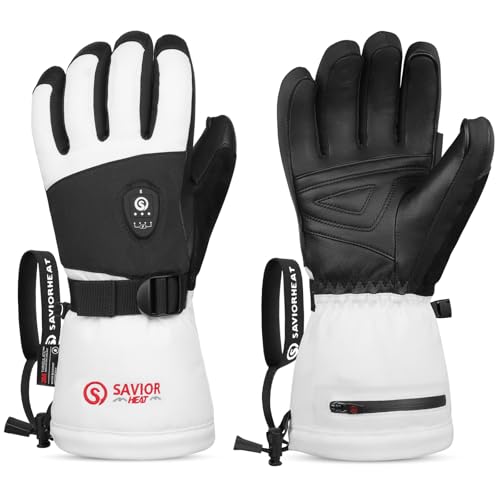
Savior Heat Heated Ski Gloves 2.0
Goatskin over a HIPORA membrane, and the pick if your snow is wet rather than cold. Savior also puts the controls on your phone, so you set the temperature and a shutoff timer without taking a glove off. Important: this is not the same product as Savior's general heated glove, and the difference matters enormously here.
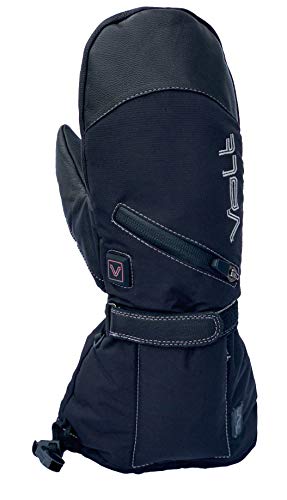
Volt Avalanche X Heated Mittens
A mitten rather than a glove, and that is the point. Your fingers share heat in one chamber instead of each losing it separately, which is why a mitten is warmer than a glove drawing the same power. Volt names a waterproof and breathable membrane on a 60% nylon and 40% leather build, which puts it alongside the Savior on weather protection and ahead of it on outright warmth.

Volt Heated Snow Gloves
No detachable liner, no app, no menus. A pre-curved glove with a button, heat across the back of the hand and the palm, and the longest claimed low-setting runtime of the three gloves here. Worth knowing before you buy: the heat does not extend into the fingers on this model, which is where cold is felt first, and it costs more than the ORORO.
How they compare
| Model | Power | Claimed runtime | Weather protection | Heat coverage |
|---|---|---|---|---|
| ORORO 3-in-1 | 7.4V, 2000mAh | Up to 8 hrs, low | Water resistant | Five fingers, back |
| Savior Heat Ski 2.0 | 7.4V, 3000mAh | 9 to 10 hrs, low | HIPORA membrane | Fingers, back |
| Volt Avalanche X | 7V battery | 2 hrs, high | Waterproof membrane | Whole hand |
| Volt Snow Gloves | 7V battery | 8+ hrs low, 2+ hrs high | Not stated | Back and palm only |
Every figure here is the manufacturer's own claim, taken from each product listing, and low-setting figures assume room temperature. Expect less in the cold. Where a listing gives no figure, the table says so rather than filling the gap. Our guide to runtime claims explains why these numbers run optimistic.
The heat coverage column is the one most buyers never check and the one that separates these four. Cold is felt in the fingertips first, so a glove that warms the back of the hand and the palm is solving a different problem from one that runs heat out to the fingers.
Water resistant is not waterproof
This is the single most useful distinction to understand before spending money here. Water resistant describes a treated fabric that sheds light snow for a while. Waterproof describes a membrane bonded into the glove. Both phrases appear on ski gloves and they do not mean the same thing.
Independent testers who submerged Savior Heat's general heated glove found it started absorbing water immediately and was completely waterlogged after two minutes. They still rated it the best budget heated glove overall, and it is a fine glove for a dog walk or a cold office. It is the wrong glove for a mountain, and the ski version above is a genuinely different product built around a membrane.
Here is what each of our four picks claims, in its own words. The Savior Ski 2.0 names a HIPORA membrane under goatskin. The Volt Avalanche X names a waterproof and breathable membrane in a nylon and leather build. The ORORO 3-in-1 describes itself as water and wind resistant, offering protection against snow, cold wind and light moisture, and names no membrane. The Volt Snow Gloves listing makes no weather protection claim at all, which is not the same as failing one, but it does mean there is nothing to rely on.
Our top pick therefore sits on the resistant side of that line, and we would rather say so than bury it. Light moisture is the operative phrase in ORORO's description. In cold dry snow that is enough, and the removable liner buys more real comfort across a day than a membrane would. In wet snow it is not enough, and you should buy the Savior or the Avalanche X instead.
Practical advice: if you ski in coastal or spring conditions where the snow is wet, buy something with a named membrane and treat everything else as a fair-weather glove. If you ski somewhere cold and dry, water resistance is genuinely sufficient and you can spend the difference on battery instead.
Four questions that decide it
How long is your day, really?
First lift to last is seven or eight hours, and no battery here covers that on anything but the lowest setting. The workable approach is to run low most of the day and step up while you are sitting on a lift, which is when you are cold anyway. If you plan to run high, buy a second set of batteries and swap at lunch. It is cheaper than buying a warmer glove for the same effect.
Is your snow wet or dry?
This decides the shell and it is the question that separates a good purchase from a bad one. Wet coastal snow, spring conditions, or a day of falling means you want a named membrane. Cold dry interior snow is much less demanding, and a resistant glove will be lighter, more dexterous and often cheaper.
Do you need to take a glove off?
If you handle a phone, a camera, buckles or a boot adjustment, the 3-in-1 approach earns its price, because you can pull the outer glove and still have a heated layer on. If you put gloves on at the car and take them off at the bar, a single heavy glove or a mitten is simpler and warmer.
Are you sure you want gloves and not mittens?
Worth asking honestly, and it is why there is a mitten on this page. Your fingers share heat in a mitten instead of each radiating separately, so a mitten is warmer than a glove drawing the same power. The reason most people still buy gloves is that mittens make everything fiddly, from lift passes to boot buckles, and you end up taking them off more, which costs you the warmth you gained. If you ski somewhere genuinely cold and you are not fussing with equipment all day, the mitten is the warmer buy.
Three that did not make it
Gerbing Vanguard 12V. Our top pick for motorcycling and completely wrong here. It is a wired system that draws from a vehicle's electrical supply, and it needs a battery harness, a Y-harness and a temperature controller to run standalone, all sold separately. There is no vehicle on a chairlift. Our explainer on 7.4V against 12V covers why the two systems are not really competing.
Savior Heat's general heated glove. The submersion result described above. Good glove, wrong application.
ORORO All-Around. Our overall pick for everyday use and a genuinely good glove, but it has no gauntlet and no removable liner, so it offers nothing for skiing that the 3-in-1 does not do better. If you want one glove for the commute and the occasional resort weekend, it is still the sensible buy and it is covered in our main heated gloves guide.
The specs that actually matter
Worth checking
- Whether a waterproof membrane is actually named
- Where the heat goes, since fingers get cold before palms do
- Gauntlet length, which is what keeps snow out of the cuff
- Whether spare batteries are sold, since a swap beats a bigger battery
- Whether you can change the setting with the glove on
Safe to ignore
- Runtime ranges so wide they cover a whole product line at once
- Peak temperature figures, which drain a battery in two hours
- Touchscreen fingertips, which barely work through a ski glove anyway
- Named heating technologies, which are branding for resistance elements
- Reflective detailing, which does nothing on a groomed run
Common questions
What are the best heated gloves for skiing?
The ORORO 3-in-1 for most skiers, because the removable heated liner handles the fact that a ski day swings between sitting still and working hard. If your snow is wet, the Savior Heat Ski 2.0 names a membrane and is the safer buy. If you ski somewhere severely cold and can live with a mitten, the Volt Avalanche X is the warmest thing on this page.
Will heated gloves last a full ski day?
On the lowest setting, most will get close, and on high none of them will. Manufacturer figures assume low heat at room temperature, and lithium batteries lose capacity in the cold, which is exactly when you want them. Plan to run low and step up on the lift, or carry a spare set of batteries and swap them at lunch.
Are heated ski gloves waterproof?
Some name a membrane and some do not, and the listings rarely make the distinction easy to spot. Of the four picks here, the Savior Ski 2.0 names HIPORA and the Volt Avalanche X names a waterproof breathable membrane. The ORORO 3-in-1 describes itself as water and wind resistant against light moisture. The Volt Snow Gloves listing does not address it. If you ski in wet snow, buy from the first group.
Can I use heated glove liners under my ski gloves instead?
Only if your ski gloves have room to spare, which most do not, because they were bought to fit. Put your gloves on and make a fist: if your fingertips already reach the end, a liner will not go in. If there is a clear gap, liners are a cheaper route to the same result. Our guide to heated glove liners covers the options.
Are heated mittens warmer than heated gloves for skiing?
Yes, at the same power draw, because your fingers share heat in one chamber instead of each losing it separately. That is why the Volt Avalanche X is on this page as the severe-cold pick. The reason most people still buy gloves is that mittens make everything fiddly, from lift passes to boot buckles, so you take them off more, which costs you the warmth you gained.
Are heated gloves worth it for skiing?
If your hands are reliably fine in ordinary ski gloves, no. If you are the person cutting runs short or spending twenty minutes in the lodge warming your hands, then yes, and the cost is comparable to good unheated gloves from a mountain brand. They are also worth considering if cold hands are a circulation issue rather than a weather one, which our guide to heated gloves for Raynaud's covers.
Which one should you buy?
Buy the ORORO 3-in-1 if your snow is cold and dry. The detachable heated liner solves the real problem with skiing, which is that one glove has to cover a lift ride and a hard run in the same afternoon, and no other pick here does that.
Buy the Savior Heat Ski 2.0 if your snow is wet, and do not talk yourself out of it. Goatskin over a named membrane, with app control so you are not removing a glove to change the setting.
Buy the Volt Avalanche X if cold rather than wet is your problem and you can accept a mitten. It has both a membrane and the warmth advantage that comes from your fingers sharing one chamber. The Volt Snow Gloves are the plain option if you want a button and nothing else, though the heat stops at the palm and the back of the hand.
Whichever you pick, buy a second set of batteries at the same time. It is the cheapest upgrade available and it is the difference between finishing the day warm and finishing it in the lodge.