Buy the same brand’s battery, every time
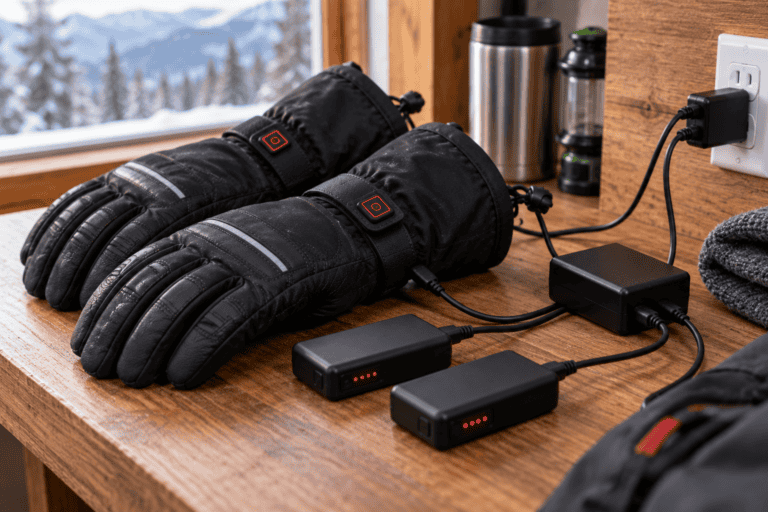
Heated glove batteries wear out. Most are rated for somewhere around 300 to 500 full charge cycles, and after two or three winters of regular use it is normal to notice the high setting fading noticeably faster than it used to. That is not a fault, it is chemistry, and a fresh set of batteries usually brings the gloves back to life.
The rule for replacing them is simple: buy the battery your glove’s manufacturer sells for that glove. A generic pack with a plug that looks the same can differ in voltage, size or wiring, and several brands void their warranty if you use another maker’s battery. Glove batteries from the major brands cost roughly $25 to $40 each, which is little enough that the savings from a generic pack are rarely worth the risk.
The rest of this page covers how to tell a battery is finished, what each brand sells, and how to store and dispose of packs safely.
Signs your batteries need replacing
Two kinds of signs matter, and they call for different responses.
Normal ageing: replace when it suits you
Runtime that has shrunk well below what you used to get, a battery that shows full but drops quickly once you switch to high, or one glove consistently dying long before the other. All of these point to cells that have lost capacity. Savior Heat’s warranty is explicit that gradual capacity loss is normal ageing rather than a defect, and most brands treat it the same way.
Safety warning: stop using it now
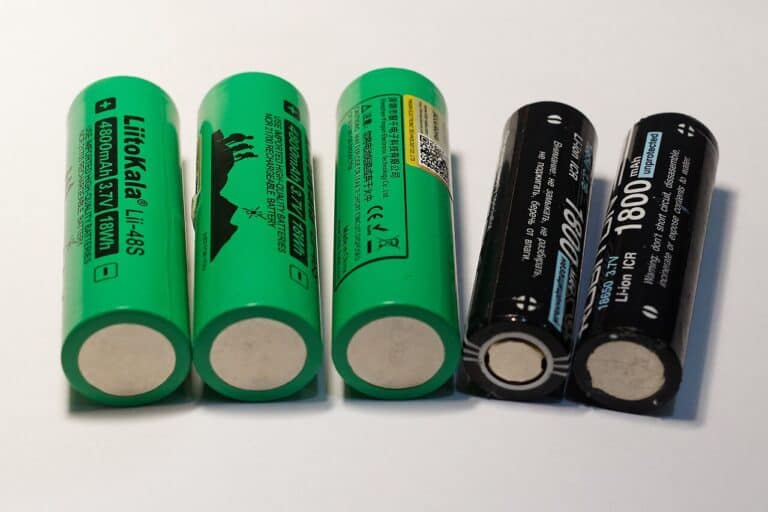
The National Fire Protection Association advises stopping use of any lithium-ion battery that shows an odour, a change in colour, unusual heat, swelling or a change in shape, leaking, or strange noises. A swollen glove battery is not a battery to squeeze back into its pocket for one more trip. Take it out, put it somewhere non-flammable away from anything else, and recycle it.
Before you buy new batteries: charge the old ones fully at room temperature and try again. A pack that has spent the night in a cold car will read low and run short until it warms up, and that can look like a dead battery when it is not.
Replacement batteries for each brand
| Brand | Glove battery voltage | Capacity | Sold separately | Battery warranty |
|---|---|---|---|---|
| ORORO | 7.4V | 2000 or 2200mAh | Yes, about $30 | 1 year |
| Savior Heat | 7.4V | 2200 or 3000mAh | Yes, sold in pairs | Terms conflict |
| Volt Heat | 7V (separate 8V line) | 2600 to 5000mAh | Yes, from about $40 | Excluded |
| Gerbing | 7V (separate 12V line) | 2600 or 3400mAh | Yes, via retailers | 90 days |
| Venture Heat | 7.4V (Epic gloves) | 1800mAh | Yes, about $29 | 1 year |
| Fieldsheer / Mobile Warming | 7.4V | 2000mAh | Yes, about $30 | 1 year |
| Milwaukee | 7.4V (M700, M701) | 2Ah | Check retailer | Separate from garment |
From manufacturer and retailer pages, October 2026. Prices change often. No brand publishes the physical connector type for its glove batteries, so do not assume two plugs that look alike are compatible.
ORORO
ORORO sells its glove battery separately and lists it for its heated gloves, scarf and socks. It says plainly that it does not advise batteries from other brands and that damage caused by them is not covered by warranty. Its newer 2200mAh packs charge over USB-C, the older 2000mAh packs over micro-USB.
Savior Heat
Savior sells 2200mAh and 3000mAh packs in pairs for its gloves, socks and jackets. Its warranty excludes damage from incorrect voltage or incompatible power accessories. Savior’s product pages, policy page and page metadata give different warranty lengths, so confirm the term in writing before relying on it.
Volt Heat
Volt’s 7V packs are designed to fit every Volt 7V jacket, vest and glove, including older models, which makes spares unusually flexible. Volt also runs separate 3V, 5V, 8V and 12V lines that are not interchangeable with the 7V gear. Batteries and chargers are excluded from Volt’s lifetime garment warranty.
Gerbing
Gerbing’s 7V batteries are listed as compatible with all its 7V vests, jackets and gloves across generations. Its 12V gear is a separate system, mostly powered from a motorcycle. Gerbing’s warranty covers batteries and chargers for only 90 days, much shorter than the heating elements.
Venture Heat, Fieldsheer and Milwaukee
Venture Heat‘s BX-25 pack fits its Epic gloves and mittens only, and the brand matches apparel batteries to products by a code on the tag. Fieldsheer‘s glove pack fits its 7.4V gloves, and the company warns that its 3.7V sock batteries will not work in 7.4V gear. Milwaukee’s current heated gloves use a dedicated 7.4V battery that does not fit its M12 tools, a point we cover in our Milwaukee heated gear review.
Why a matching plug is not enough
Search for a replacement and you will find generic packs promising to fit a long list of brands. Some will work. The problem is that you cannot tell which from the listing.
Heated gear runs on 3.7V, 7V, 7.4V, 8V and 12V systems, sometimes within the same brand. Pack sizes range widely, and a battery that is a few millimetres too thick will not close inside a cuff pocket. Some gloves need one battery per hand and some share a pack. No glove brand publishes its connector specification, so two plugs that look identical may not be wired the same way.
Then there is the warranty. ORORO and Gerbing both exclude damage caused by other makers’ batteries or accessories, and Savior excludes incompatible power accessories. A $15 saving on a generic battery can cost you the warranty on a $150 pair of gloves.
If the brand no longer sells your battery: contact its support before buying a generic. Brands often have a compatible newer pack or a direct replacement that is not listed on the main site.
Store them part-charged
How you store batteries over the summer matters more than anything else you do with them. Battery University’s figures show lithium-ion cells stored full at room temperature lose around 20 percent of their capacity in a year, against about 4 percent when stored at around 40 percent charge.
So at the end of the season, charge your batteries to roughly half, take them out of the gloves and store them somewhere cool and dry. ORORO suggests storing at about two indicator lights and topping up every six months. Fieldsheer suggests every three months. Never leave packs flat for months, which can leave them unable to take a charge at all. Our guide to heated glove battery life and our guide to charging heated gloves cover the rest.
How to dispose of old glove batteries
Do not put lithium-ion batteries in household trash or curbside recycling. They cause fires in collection trucks and sorting facilities. The US Environmental Protection Agency recommends bagging each battery individually, covering the terminals with non-conductive tape, and taking it to a battery recycler, a retailer take-back point or a household hazardous waste site.
Call2Recycle runs a free drop-off locator by ZIP code with thousands of US locations, and many hardware and electronics stores accept small lithium batteries. For a swollen or damaged pack, contact the manufacturer or your local hazardous waste service first.
Spare batteries go in carry-on
FAA rules keep spare lithium batteries out of checked luggage. Pack spare glove batteries in your carry-on with the terminals protected, either in their original packaging, a case or with tape over the contacts. If your carry-on gets gate-checked, take the spares out first. A typical 7.4V 2200mAh glove battery is around 16 watt-hours, well under the 100 watt-hour limit that applies without airline approval.
Common questions
How long do heated glove batteries last before they need replacing?
Most lithium-ion packs are rated for about 300 to 500 full cycles. For regular winter use that usually means two to four seasons before runtime drops noticeably, longer if you store them part-charged over summer.
Can I use a different brand of battery in my heated gloves?
We would not. Voltage, pack size and wiring vary between brands, connectors are not standardised, and several brands void the warranty if another maker’s battery is used.
Are 7V and 7.4V heated glove batteries the same?
They describe similar two-cell lithium packs, but that does not make them interchangeable. Size, connector and wiring still differ, so stick to the battery your glove maker specifies.
Do heated glove batteries come with a warranty?
Usually a shorter one than the gloves. Gerbing covers batteries for 90 days, Volt excludes them from its lifetime warranty, and ORORO offers one year.
How do I recycle heated glove batteries?
Tape the terminals, bag each battery separately and take it to a battery drop-off point. Call2Recycle has a locator by ZIP code. Never put them in household trash.
What to do
If your gloves are running short after a few seasons, the batteries are almost certainly the cause, and a manufacturer replacement will usually fix it for $25 to $40 a pack. Buy from the glove’s own brand, check the model number matches, and keep the old ones out of the trash.
If your batteries are swelling, leaking or getting hot when they should not, stop using them today. And if you are shopping for new gloves rather than new batteries, battery capacity and how easy spares are to buy are worth weighing alongside heat. Our best heated gloves guide covers both.